
Urvashi
Content Creator
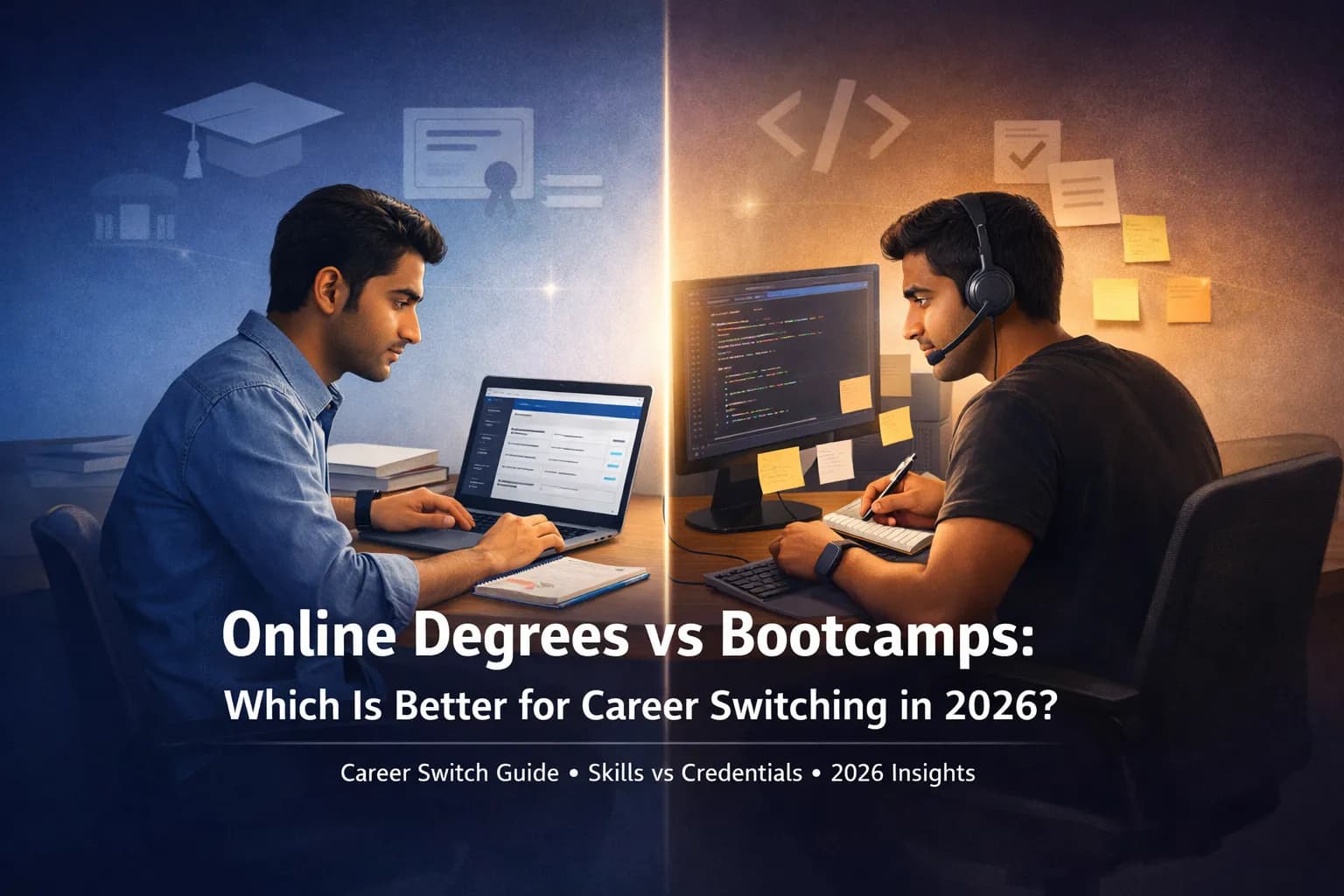
Career switching has become common now. Fast digital adoption encourages more transitions toward tech, data, business, and management roles. This shift increases interest in the online degree vs bootcamp debate. Both options promise skill development, but each follows a different structure, pace, and cost pattern.
A career switcher needs clarity before choosing any learning path. Selecting the wrong pathway may delay progress or increase financial burden. Every decision needs proper understanding of outcomes, job roles, and learning depth. This blog explains how online degrees and bootcamps serve career switching needs in 2026. It also explains major comparisons like coding bootcamp vs MCA and MBA vs skill bootcamp.
Career switching rises because industries change faster than before. Companies now prefer multi-skilled professionals who understand digital tools and modern workflows. Many employees feel limited in their current roles and want better opportunities. Shorter hiring cycles motivate employers to pick candidates with verified skills and strong academic credibility.
Several factors drive this behaviour:
These factors push learners to explore the online degree vs bootcamp comparison more seriously. Both options support skill improvement, but each path suits different career goals.
Online degrees attract career switchers because they offer structured learning with academic validation. Many universities now provide online MCA, online MBA, online BCA, online BBA, and online MCom programs. These programs follow an approved curriculum and offer recognised credentials. Strong academic foundation helps candidates apply for senior roles, government roles, or corporate roles requiring formal education.
The following points explain the rising demand:
These benefits make flexible degrees useful for career switchers looking beyond entry-level roles. Strong industry recognition helps learners move into fields like management, analytics, cloud computing, and software development.
Bootcamps gained popularity because they focus only on practical skills. Many learners want job-ready training within a short duration. Bootcamps provide fast-learning programs in coding, UI/UX, data analytics, digital marketing, data science, cloud computing, and product management. These programs promise speed, intensive practice, and strong project exposure.
Bootcamps support career switching in the following ways:
Bootcamps suit candidates who want fast entry into tech fields without long academic commitments. This makes bootcamps an attractive option for professionals switching from non-tech backgrounds.
Many candidates compare online degree vs bootcamp options because both follow different learning structures. Online degrees support deep academic learning and long-term career recognition. Bootcamps focus on practical training and job-ready skills.
The table below explains the difference clearly.
| Aspect | Online Degrees | Bootcamps |
|---|---|---|
| Duration | Long term programs | Short term programs |
| Focus | Academic learning | Practical skills |
| Recognition | Strong global value | Varies widely |
| Depth | Broad concepts | Specific tools |
| Path | Career upgrade and switching | Fast switching |
| Cost | Moderate to high | Moderate |
| Flexibility | High flexibility | Fixed schedules |
Online degrees build strong domain foundations with theoretical and practical exposure. Many employers value structured learning because it provides a dependable understanding of core subjects. Degrees help candidates apply for stable roles and advanced positions. Professionals planning long-term growth benefit from this model because it supports senior-level eligibility across industries.
Key strengths include:
This helps career switchersmove into IT, analytics, finance, HR, marketing, and international business roles.
Bootcamps focus on speed and practice. They remove unnecessary theory and teach industry-relevant tools in a compact curriculum. The main intention is to help learners build job-ready portfolios. This method suits fast-moving industries that need quick skill adoption. However, bootcamps do not provide academic degrees, which may limit eligibility for some roles.
Key benefits include:
This makes bootcamps useful for immediate job shifts, especially in tech fields with high demand.
Several companies now follow hybrid hiring standards. Some prefer candidates with academic qualifications, while others focus on practical portfolios. Hiring decisions depend on job type, role seniority, and technical complexity. This environment increases confusion around choosing online degree vs bootcamp.
Key changes seen in the 2026 job market include:
These market factors influence career switching decisions across industries.
A major debate appears around coding bootcamp vs MCA. Many learners want fast skill acquisition, while others want deeper academic knowledge. The MCA program offers broad technical subjects over several semesters. Coding bootcamps provide intensive training focused only on development tools.
Both options serve different goals. MCA programs suit individuals seeking long-term technical positions that require a strong academic background. Coding bootcamps suit those seeking faster entry into software jobs without long study periods. The decision depends on role expectations and career duration plans.
| Aspect | Coding Bootcamp | MCA Degree |
|---|---|---|
| Duration | Short programs | Multi-year program |
| Focus | Practical coding | Broad computer science |
| Recognition | Industry-based certificate | Academic qualification |
| Outcome | Entry-level developer roles | Mid-level and senior roles |
| Depth | Tool-based knowledge | Theory and practical depth |
| Flexibility | Limited timings | High flexibility in online format |
| Suitability | Fast career shifts | Long-term technical careers |
This table helps career switchers understand how each option fits different goals.
Another popular comparison involves MBA vs skill bootcamp. Many professionals aim for management roles in 2026. Some want proper leadership training through an MBA. Others want quick digital or analytical skills through bootcamps.
An MBA provides a structured path toward management, strategy, and leadership positions. A skill bootcamp focuses on specific tools like analytics, marketing, or operations. Both help in career switching but lead to very different career paths.
An MBA helps candidates build strong business foundations. Skill bootcamps help candidates build specific technical abilities. The ideal choice depends on whether the goal involves leadership or operational tasks.
| Aspect | MBA Degree | Skill Bootcamp |
|---|---|---|
| Purpose | Management development | Tool-based learning |
| Duration | Long-term program | Short-term course |
| Recognition | Accepted worldwide | Limited recognition |
| Focus | Strategy and leadership | Practical tools |
| Career Path | Managerial roles | Operational roles |
| Salary Impact | Higher growth potential | Stable entry-level salaries |
| Flexibility | High in online format | Structured fixed timings |
This comparison helps learners match their career goals with the correct learning path
Bootcamps work well when learners need specific job skills quickly. Fast learning structures help participants understand real tasks. Clear project-based training helps them build portfolio strength. Placement networks support job seekers during transitions.
Bootcamps offer strong outcomes when:
These conditions make bootcamps suitable for fast-moving industries.
Online degrees deliver better results for long-term stability. Structured courses help learners build a deep understanding of subjects. Strong recognition helps candidates enter senior-level roles. This makes online degrees suitable for individuals planning stable careers.
Online degrees offer advantages when:
These elements make flexible degrees valuable in competitive job markets.
Placement outcomes vary based on program quality and industry demand. Bootcamps often offer placement assistance with partnerships. Online degrees offer placement support through university career cells. Selection depends on hiring patterns in the industry.
Bootcamps deliver better outcomes for roles needing tool experience. Online degrees deliver stronger results for structured corporate roles. The percentage may vary across institutions.
| Aspect | Online Degrees | Bootcamps |
|---|---|---|
| Placement Type | Broad industry roles | Specific technical roles |
| Hiring Speed | Moderate | Fast |
| Job Levels | Freshers to mid-level | Entry-level |
| Growth Rate | Higher long-term growth | Faster initial growth |
| Salary Range | Stable and scalable | Varies by domain |
Cost plays a major role in the online degree vs bootcamp comparison. Bootcamps usually offer shorter programs, so costs remain moderate. Online degrees may cost more because they cover long-term education.
However, the value of an online degree lasts longer because of academic recognition. Bootcamps offer short-term value through fast placement. Both choices have different benefits based on goals.
| Aspect | Online Degrees | Bootcamps |
|---|---|---|
| Fee Range | Moderate to high | Moderate |
| Duration | Long term | Short term |
| Return Value | Long-term returns | Quick returns |
| Financial Aid | Widely available | Limited options |
| Stability | Strong academic value | Skill-based value |
Career switchers often target roles that offer strong pay and global demand. Different roles require different qualifications. Some roles require deep academic strength. Some roles require strong portfolios. Clear understanding helps avoid confusion.
| Role Target | Best Path | Reason |
|---|---|---|
| Software Developer | Bootcamp or MCA | Tool mastery needed |
| Data Analyst | Bootcamp | Project-based learning |
| Marketing Manager | MBA Degree | Strategic knowledge needed |
| UI/UX Designer | Bootcamp | Portfolio-based hiring |
| Business Analyst | Online Degree | Structured foundation |
| Product Manager | MBA or Bootcamp | Depends on domain focus |
| Operations Manager | MBA | Leadership needed |
| Cloud Engineer | Bootcamp | Tool expertise |
This table helps learners choose accurate paths based on target role.
| Factor | Online Degree | Bootcamp |
|---|---|---|
| Duration | Long-term | Short-term |
| Recognition | Academic | Industry-based |
| Focus | Theory + practical | Pure practical |
| Cost | Moderate to high | Moderate |
| Job Shift Speed | Moderate | Fast |
| Long-Term Growth | Strong | Varies |
| Career Stability | High | Medium |
| Entry-Level Support | Good | Very strong |
| Senior-Level Prospects | Strong | Limited |
| Ideal For | Corporate roles | Tech roles |
This comparison highlights the core strengths of both options.
Confused between an online degree and a bootcamp? Explore verified programs and compare outcomes with expert support. Know More.
Future promotions depend on qualifications and performance. Many industries require degrees for leadership roles. Bootcamps help entry-level transitions but may limit senior-level growth. Degree holders often reach higher positions faster because degrees offer stronger eligibility.
Many corporate systems still prefer degree holders for decision-making roles. This pattern influences long-term salary and responsibilities. Online degrees maintain a strong advantage for those targeting long-term growth.
Career strategy must consider job security, growth opportunities, and recognition. Online degrees support structured growth and long-term promotions. Bootcamps support fast skill-based transitions. Both pathways work well when matched with accurate goals.
Career switchers must ask three questions:
Clear answers lead to the correct choice.
Both learning options support career switching in 2026. Online degrees provide strong recognition and long-term growth. Bootcamps provide quick skills and fast placement outcomes. The right choice depends on career goals, salary expectations, and available time.
Online degrees suit individuals needing stable careers, global recognition, and steady promotions. Bootcamps suit those targeting fast entry into technical or digital fields. Both paths offer value when chosen for the correct purpose.
Matching goals with the correct learning model leads to successful career switching.
Want the right path based on skills, goals, and job trends? Get a detailed recommendation from an advisor today. Start Now.
© 2026 Nuvora Education Private Limited. All rights reserved.