Shakhi Singh
Content Creator
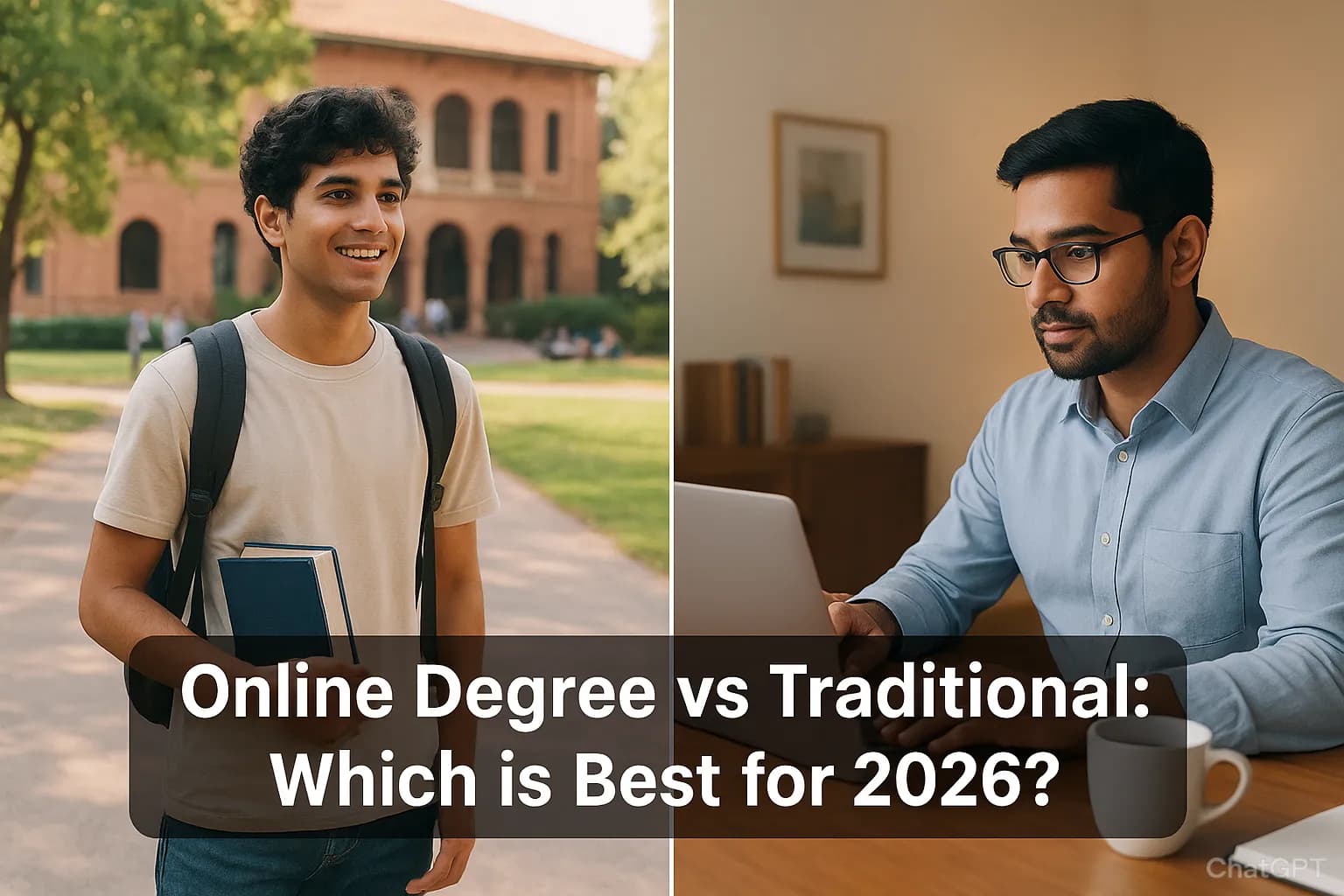
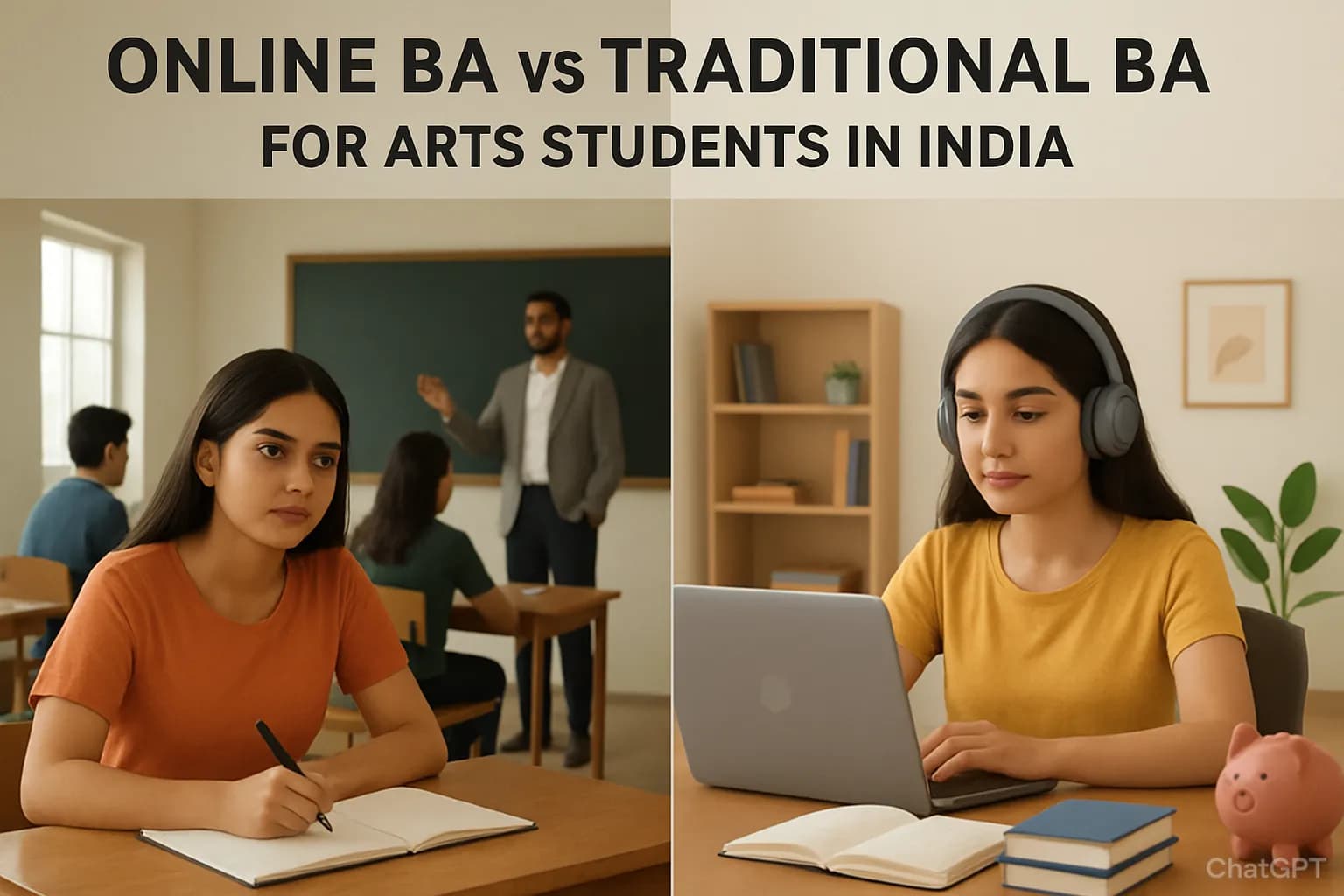
Choosing the right college path is one of the biggest decisions you'll make, and in 2026, the question is no longer if you should consider an online degree vs traditional degree, but which is better online or offline degree in 2026 for you. The clear answer is: the online degree is the best degree option 2026 for the vast majority of working professionals and modern students who value flexibility, affordability, and career advancement over a traditional campus experience. The future of online education in 2026 is not just about convenience; thanks to the UGC approved online degree, an online degree from a top Indian university has equal validity to its campus counterpart. We will show you precisely why online education vs traditional education is now a contest of quality, not credibility, allowing you to choose the format that fits your life and career goals.
For decades, the biggest hesitation in choosing online education vs traditional education was the question of validity. Did an online degree vs offline degree hold the same weight in the job market? Today, in India, that entire debate is settled.
The University Grants Commission (UGC) mandates that an online degree from an approved university is treated on par with a regular, on-campus degree. This single fact is the most crucial piece of information for the best degree option in 2026.
Key Takeaway:
The perception that an online degree can replace traditional degree in India for most white-collar careers has largely become a reality because of this regulatory change, making it a powerful and officially recognized choice for online MBA vs traditional MBA in India 2026.

| Factor | Online Degree | Traditional Degree |
|---|---|---|
| Flexibility & Schedule | High. Self-paced learning. Ideal for working professionals. | Low. Fixed class times and mandatory attendance. |
| Affordability | High Savings. Lower tuition, no hidden costs (hostel, commute, food). | High Cost. High tuition plus significant living and travel expenses. |
| Accessibility | Global. Study from any city in the world. | Local. Requires you to relocate to the campus city. |
| Work-Study Balance | Excellent. Designed for those with full-time jobs. | Poor. Requires full-time commitment, making work difficult. |
| Networking | Virtual/Global. Connects you with peers across cities and countries. | Physical/Local. Strong local campus network and direct faculty access. |
| Pace of Learning | Self-Directed. You set the speed based on your life/work demands. | Fixed. You must follow the university's set academic calendar. |
The argument for online degree vs traditional degree often boils down to money. Online degree programs are significantly more affordable.
If you are asking which is a better online or offline degree in 2026 based purely on your bank account and career momentum, the online option is the undeniable champion.
The most compelling argument for choosing an online degree in 2026 is the immense financial advantage, often leading to a significantly higher Return on Investment (ROI).
| Cost Component | Traditional Degree (2 Years, Tier-1 Private) | Online Degree (2 Years, UGC-Approved) | Annual Savings (Avg.) |
|---|---|---|---|
| 1. Tuition Fee (Core) | ₹10,00,000 to ₹30,00,000 | ₹1,50,000 to ₹5,00,000 | 1000000 |
| 2. Hidden Costs (Accommodation/Hostel) | ₹2,00,000 (Per year) | 200000 | |
| 3. Living Expenses (Food, Commute, etc.) | ₹1,50,000 (Per year) | ₹0 (Studying from home) | 150000 |
| 4. Opportunity Cost (Lost Salary) | ₹0 (No income during full-time study) | Continues to earn current salary | ₹6,00,000 (Avg. Working Pro Salary) |
| TOTAL ESTIMATED COST (2 Years) | ₹17,00,000 - ₹37,00,000 | ₹1,50,000 - ₹5,00,000 | Massive Savings & Continued Income |
Case Study: The Online MBA Advantage
For a working professional, pursuing an Online MBA program from a top university is a financial masterstroke. While a full-time, residential MBA can cost upwards of ₹20 Lakhs (excluding living costs) and requires you to quit your job (losing 2 years of salary), an Online MBA (like the Online MBA in Finance or HR offered by top universities) can be completed for under ₹5 Lakhs while you continue to earn and gain experience. The ROI is recovered in months, not years.
The learning experience is the core of the debate between online courses vs regular courses. Skeptics often question the quality of online learning vs classroom learning.
Today's UGC approved online degree programs have closed the quality gap.
The biggest con in the pros and cons of online vs traditional education for online learning is the need for self-discipline. Since there is no physical professor to check on you every morning, you must manage your time and stay motivated. If you are highly disciplined, a self-paced structure is a massive benefit. If you need fixed deadlines and the social pressure of a physical classroom to function, a traditional offline study approach might be a better fit.
The final and most important factor is the career scope of online degree vs offline degree and job acceptance.
In 2026, the market has matured, and employers are far more focused on the university and the skills you possess than the mode of education.
The key is to always choose a UGC approved online degree vs regular degree from one of the recognized best Indian colleges offering online degrees. This eliminates any doubt about credibility.

The difference between online and traditional degree often boils down to the subject itself. While degrees requiring extensive lab work (like certain Engineering or physical Sciences) might still favour the traditional path, most major career streams are thriving in the online mode.
Here are the high-demand courses offered by DegreeFYD that are perfectly suited for the online format:
Ready to find the perfect UGC-Approved Online Degree for your 2026 career plan? Explore the top-ranked Online MBA, Online BCA, and Online BBA programs offered by our partner universities, including Jain, NMIMS, and Chandigarh University.Click Here to Compare Courses and Calculate Your ROI!
The question is, is an online degree better than a traditional degree in 2026? cannot be answered with a simple yes or no; it depends on you.
The best degree option 2026 is ultimately the one that provides recognized quality (UGC-approved) and fits seamlessly into your life, ensuring a higher online learning vs traditional learning success rate by reducing personal and professional stress. Still unsure about which program is right for you in 2026? Get Free, Personalized Career Counseling for Online Study.
In 2026, the choice between Online degree vs traditional degree isn't about quality, it's about lifestyle. For those who need flexibility, must continue working, or cannot relocate, the UGC approved online degree is not just a viable alternative; it is the superior choice. It offers the same qualification, but with a modern, affordable, and flexible delivery model.
Don't let logistics block your career goals. Your future career success depends on the brand of the university and the skills you acquire, not the classroom you sat in. Ready to find the UGC-approved program that fits your life and career? Explore Best UGC Approved Online Degreeson DegreeFYD.
© 2026 Nuvora Education Private Limited. All rights reserved.