
Sakshi Rajawat
Content Creator
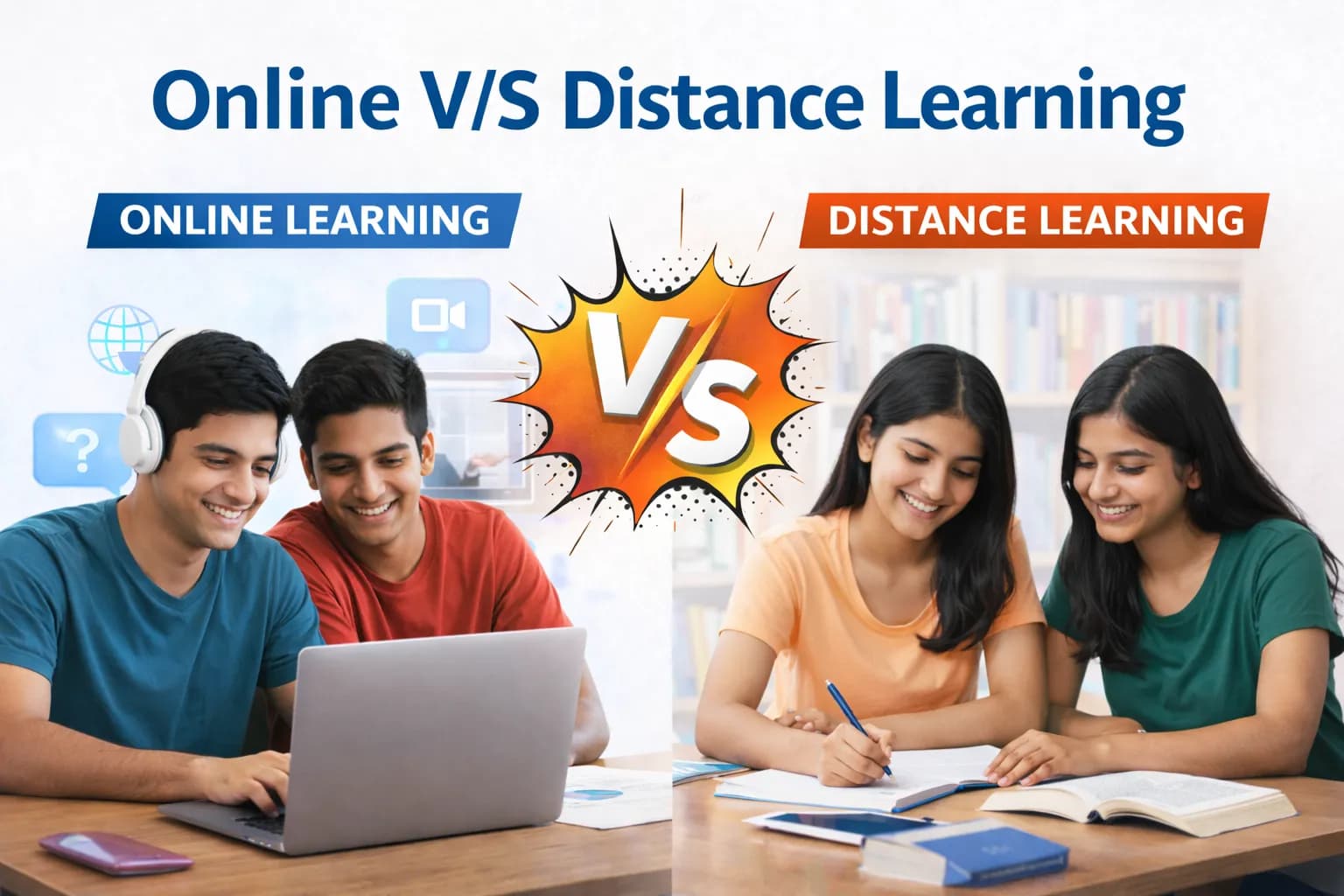
Higher education in India is changing very fast. Many students now choose flexible learning options. The main choices are online vs distance learning. Both modes allow students to study without going to campus. However, these two methods are not exactly the same. This blog explains the difference between online and distance education. It covers key benefits and online education eligibility. Students often wonder, is distance degree valid in India? This guide provides all the necessary facts. It helps in choosing an online degree vs distance degree. Knowing what is online learning and what is distance learning is vital for career success.
What is distance learning?Distance Learning is a traditional way of remote education. It is also known as Open and Distance Learning (ODL). In this mode, the student and teacher are separate. They do not meet in a physical classroom. The university sends study materials to the student. These materials are usually printed books. Students receive them via post or courier.
Distance learning started many decades ago. It helped people in rural areas. It also helped working professionals. These people could not attend regular college. The focus is on self-study. Students read the books at home. They prepare for exams on their own. Some universities provide weekend classes. These are called Personal Contact Programs (PCP). These sessions are optional for students.
A UGC approved distance degree is highly valued. The University Grants Commission (UGC) regulates these programs. The Distance Education Bureau (DEB) gives the final approval.Is distance degree valid in India? Yes, it is fully valid. It is equal to a regular degree. This is true if the university has UGC-DEB recognition.
| Feature | Description |
| Study Material | Printed books sent by post. |
| Classroom Interaction | Very low or no interaction. |
| Exam Mode | Offline at designated centers. |
| Technology Need | Low; internet is not mandatory. |
| Schedule | Highly flexible and self-paced. |
| Support | Regional centers for student help. |
The distance education eligibility criteria are simple. Most undergraduate courses require a 10+2 certificate. Postgraduate courses require a bachelor's degree. Some professional courses might need 50% marks. There is usually no upper age limit. This makes it perfect for older learners.
What is online learning? Online Learning is a modern way of education. It uses the internet and digital tools. It is often called e-learning or virtual education. Students use a Learning Management System (LMS). This portal contains all study resources. It has recorded videos and digital notes. It also has live interactive sessions.
Online learning is very popular in 2026. It mimics the traditional classroom experience. Students can talk to teachers during live classes. They can ask questions and clear doubts. They also interact with fellow students. This happens through discussion forums and chat groups. This builds a strong student community.
A UGC approved online degree is a legal qualification. The UGC allows top-ranked universities to offer online courses. These universities must have high NAAC scores. Online degree recognition in India is now very strong. The government treats online degrees like regular ones. This is part of the National Education Policy (NEP).
| Feature | Description |
| Delivery Method | Digital portal and live classes. |
| Interaction | High; real-time talks with faculty. |
| Exam Mode | Online with remote proctoring. |
| Internet Need | High; constant connection is required. |
| Learning Pace | Structured with weekly goals. |
| Course Access | 24/7 access to recorded lectures. |
The online education eligibility is similar to distance mode. Students need a 10+2 pass for bachelor's degrees. For master's degrees, a graduation degree is necessary. Some universities may conduct an online test. This tests the basic skills of the student. Many working professionals prefer this mode for MBAs.
Both modes offer many advantages. They solve the problem of physical distance. They also save time and money. Here are the main benefits of online education vs distance education.
Students can create their own schedules. They do not have to travel daily. This helps people who have jobs. It also helps those with family duties. They can study at night or on weekends. This flexibility is the biggest draw.
These programs are usually cheaper. There is no need for hostel fees. There are no commuting costs. The tuition fees are also lower than regular courses. This makes quality education affordable for everyone.
Many people want to upgrade their skills. They can do an online course vs distance course while working. This leads to better job roles. It also leads to salary hikes. Employers now value these degrees highly.
Is online degree valid for government jobs? Yes, it is perfectly valid. The UGC states that all modes are equal. This includes regular, online, and distance modes. Students can apply for UPSC or SSC exams. They can also apply for bank jobs.
| Benefit | Online Learning | Distance Learning |
| Time Saving | High (No travel) | High (No travel). |
| Networking | High (Virtual groups). | Low (No interaction). |
| Skill Building | High (Digital tools). | Moderate (Theory focus). |
| Placement Help | Often provided. | Rarely provided |
| Course Variety | Very wide range. | Traditional subjects. |
Many people confuse online learning vs distance learning. They are different in several ways. The main difference is the level of interaction. Online learning is very interactive. Distance learning is mostly independent.
In online learning, students use a computer. They log in to a portal every day. They watch live sessions. They submit assignments digitally. In distance learning, students use books. They study offline. They may visit a center for exams.
| Parameter | Online Learning | Distance Learning |
| Primary Tool | Internet and Computer. | Printed Books and Post. |
| Teaching Style | Virtual Live Lectures. | Self-study from Modules. |
| Peer Interaction | Collaborative Learning. | Individual Learning. |
| Feedback | Instant through LMS. | Delayed or through Centers. |
| Exam Method | Home-based Proctored. | Center-based Offline. |
| Engagement | High Student Engagement. | Low Student Engagement. |
| Cost | Slightly Higher. | Very Affordable. |
| Faculty Access | Direct and Regular. | Minimal or Periodic. |
The difference between online and distance education is also about technology. Online learning needs a good internet speed. Distance learning can work without any internet. This makes distance mode better for remote areas. Online mode is better for tech-savvy students.
No system is perfect. Both modes have some challenges. Students should know these before enrolling.
There are no physical teachers to push students. Learners must be very self-motivated. It is easy to delay the studies. This can lead to unfinished courses.
Online learning depends on the internet. Power cuts can disturb live classes. Slow speeds can affect video quality. Some students find digital tools hard to use.
Students do not go to a campus. They miss out on canteen talks. They miss face-to-face sports activities. This can sometimes feel lonely.
| Challenge | Impact on Online | Impact on Distance |
| Internet Gap | High impact. | Low impact. |
| Social Isolation | Moderate. | High. |
| Self-Motivation | Required. | Strongly Required. |
| Tech Skills | Necessary. | Not Necessary. |
The choice depends on the student's needs. If someone has a busy job, online is better. It provides live help and digital notes. If someone has a low budget, distance is better. It is very cheap and simple.
Students should check their learning style. Do they like watching videos? Then an online degree vs distance degree comparison favors online. Do they like reading physical books? Then distance mode is the right choice.
Both degrees are valid in India. Online degree recognition in India is growing fast. Corporate companies prefer online graduates for their tech skills. Government departments treat both as equal.
| If You Want | Choose This Mode |
| Live Interaction | Online Learning. |
| Lowest Fees | Distance Learning. |
| Digital Networking | Online Learning. |
| No Internet Need | Distance Learning. |
| Job Readiness | Online Learning. |
Choosing the right university is very important. Many institutions offer these programs today. Students must look for UGC-DEB approval. This ensures the degree is valid. Below table provide the information about the Top UGC-Approved Universities in India that provides Online and Distance Courses:
Top UGC-Approved Universities in India
| University Name | Recognition | Learning Mode | Popular Courses |
| Amity University Online | UGC, NAAC A+, AICTE | Online | MBA, BBA, MCA, BCA |
| IGNOU | UGC, NAAC A++ | Distance & Online | BA, B.Com, MA, MBA |
| Manipal University | UGC, NAAC A+ | Online | MBA, MCA, BBA |
| Chandigarh University | UGC, NAAC A+ | Online | MBA, BBA, BA |
| LPU Online | UGC, NAAC A++ | Online & Distance | MBA, MCA, M.Com |
| NMIMS Global | UGC, NAAC A+ | Online | MBA (Working Prof.) |
| Delhi University (SOL) | UGC | Distance | BA, B.Com, MA |
| SCDL (Symbiosis) | UGC, AICTE | Distance | PGDM, Certificates |
The final choice between online vs distance learning depends on individual needs. Online learning offers modern tools and constant interaction. Distance learning provides a traditional and affordable path to education. Both modes now carry the same legal weight in India. They are fully valid for all government jobs.
Students should pick the mode that fits their daily life. Flexible schedules help in managing work and study together. Always verify the status of the university before joining. This ensures your degree has UGC approved recognition. A right choice today will lead to a successful career tomorrow. Digital and distance modes are the future of learning.
© 2026 Nuvora Education Private Limited. All rights reserved.